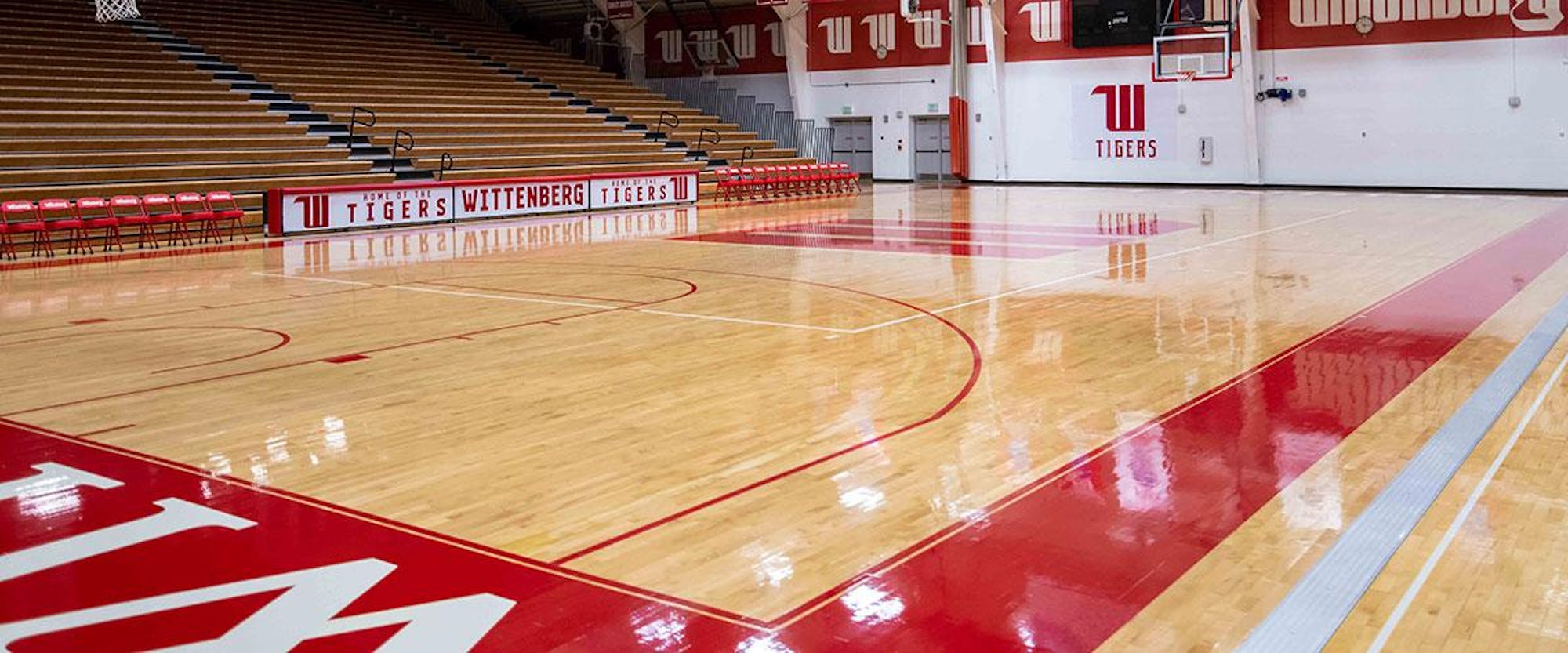
The gym was quiet that night — the kind of silence that carries memory. The banners on the walls shimmered faintly in the hum of overhead lights, each one telling a story of victory, of discipline, of love for the game. At center court, the red “W” glowed beneath the polished floorboards, a reminder of the woman whose name graced the building: Pam Evans Smith.
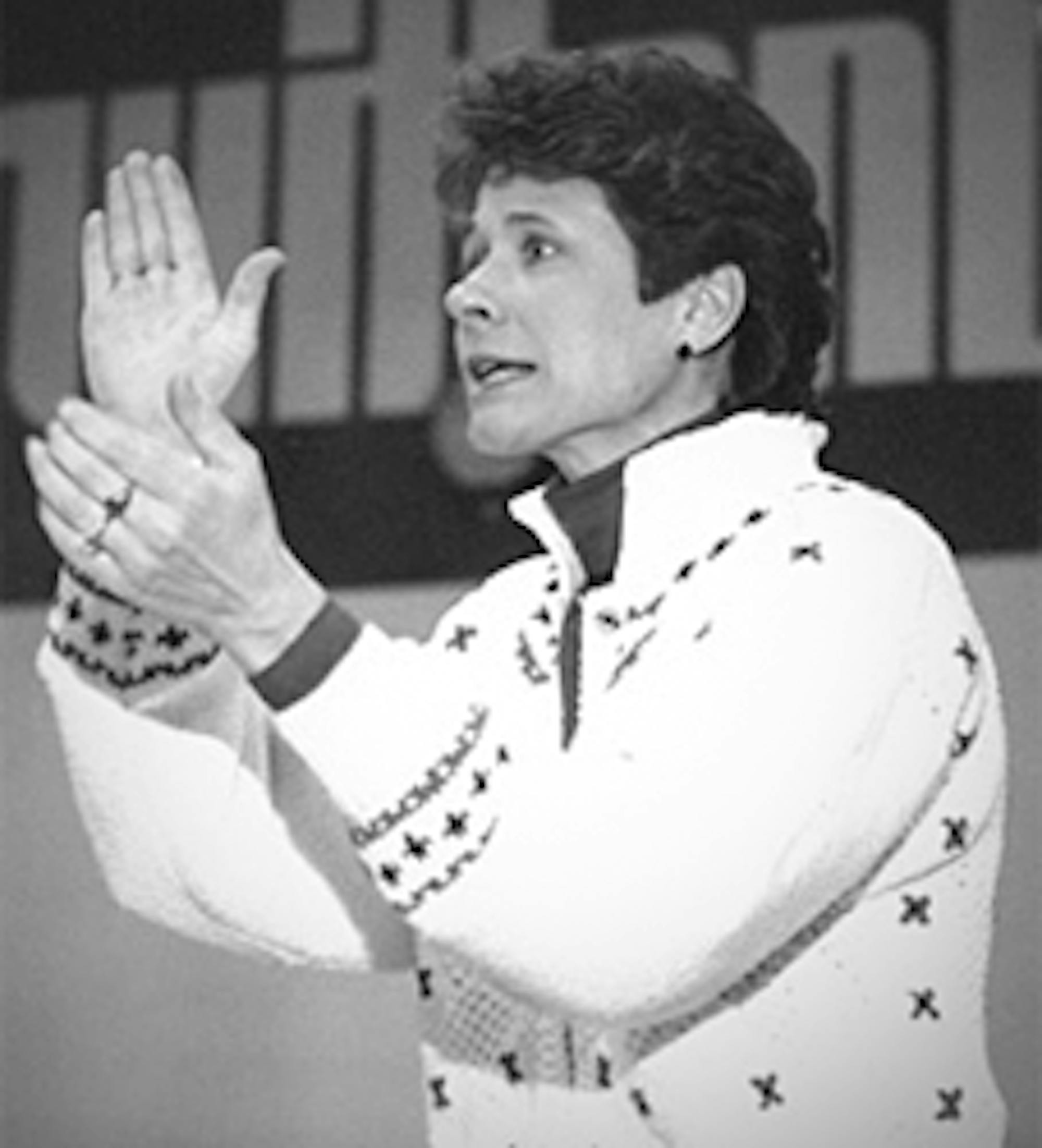
A legacy, left behind with knowledge, memories and a gym, Pam Evans Smith dedicated her life to Wittenberg University’s Women’s basketball team. Smith, a 1982 graduate of Wittenberg, made her mark early, becoming most valuable player for three seasons and second-team All-American in 1982.
In 1986-87, Evans Smith assumed the head coach role for the Wittenberg women’s basketball program, which at the time had struggled. She established herself as one of the premier women’s basketball coaches in NCAA Division III before passing away in June of 2007. A seven-time North Coast Conference coach of the year, Smith had a 401-170 record. She led the Tigers to eight appearances in the NCAC regular season championships, according to state statistics.
Many former teammates and friends still write graciously of Smith on the Wittenberg website. “She started as a player, became a phenomenal coach, and fought for the women's program to grow beyond the original, non-prioritized, girls' sports program," said Janet (Ramsey) McPhee, a '82 graduate.
“I’ll never forget my freshman year,” said Melissa Kolbe, one of Smith’s former players who later became a basketball coach herself at Wittenberg. “We were losing to Denison, and in the second half we pulled out a 2–3 zone we’d never practiced. Pam’s husband was sitting on the opposite side of the gym, coaching me from the stands,” she laughed. “We came back and won. It was one of those moments that made you believe anything was possible under her.”
Kolbe remembered the way Smith demanded excellence, no matter the circumstance. “She didn’t lose many games, and she hated when we didn’t take things seriously. Once, after a bad game where we missed too many free throws, she made us run fifteen suicides. Fifteen. She wasn’t angry — she was teaching us that effort mattered as much as talent.”
Smith’s intensity could be fierce, but her players knew it came from love. “She yelled at me a lot,” Kolbe admitted with a grin, “but it was because she saw something in me I didn’t see yet. She’s the reason I went into coaching. She pushed me to be a graduate assistant — something I had no intention of doing. But that’s who Pam was. She saw potential before you did.”
Behind the whistle and the sharp game-day suits, there was also an incredible story of strength. Pam Evans Smith quietly battled breast cancer for 17 years, a fight that few outside her close circle ever truly understood.
“She never wanted it to be about her,” Kolbe said. “She only missed one practice the entire time she was sick. None of us even knew what she was going through. She’d go to chemotherapy, then come back, sleep in the locker room, and be there for practice.”
Smith’s commitment wasn’t performative, it was deeply personal. Basketball, for Smith, was a way of life, and her team was her family. Even as the disease advanced, those who knew her best say she refused to let it take her away from the game or the people she loved.