


College is a place where you learn about your desired career path and get a degree in a major that is connected to that career. Millions of people in the United States alone are currently pursuing a college degree, with millions more that have a degree in some fashion. Students can often get overwhelmed by the workload seen in college and that often can lead them to resort to tactics that are frowned upon.
The rise of AI (artificial intelligence) in higher education has brough forth mixed opinions, with some seeing it as a tool to support academic studies, such as checking grammar, searching for information and suggesting research ideas, while others feel it has a negative impact.
A global survey by the Digital Education Council found that 86% of students use AI in some fashion in their studies. In a Chegg survey conducted at Campbell University, 53% of students who had used AI expressed concern about receiving incorrect information, and also voiced concern about the potential it had to undermine critical thinking skills.
In addition, faculty members appear split on the topic of AI, with a survey conducted by the Digital Education Council reporting that 57% of faculty had a negative view of AI.
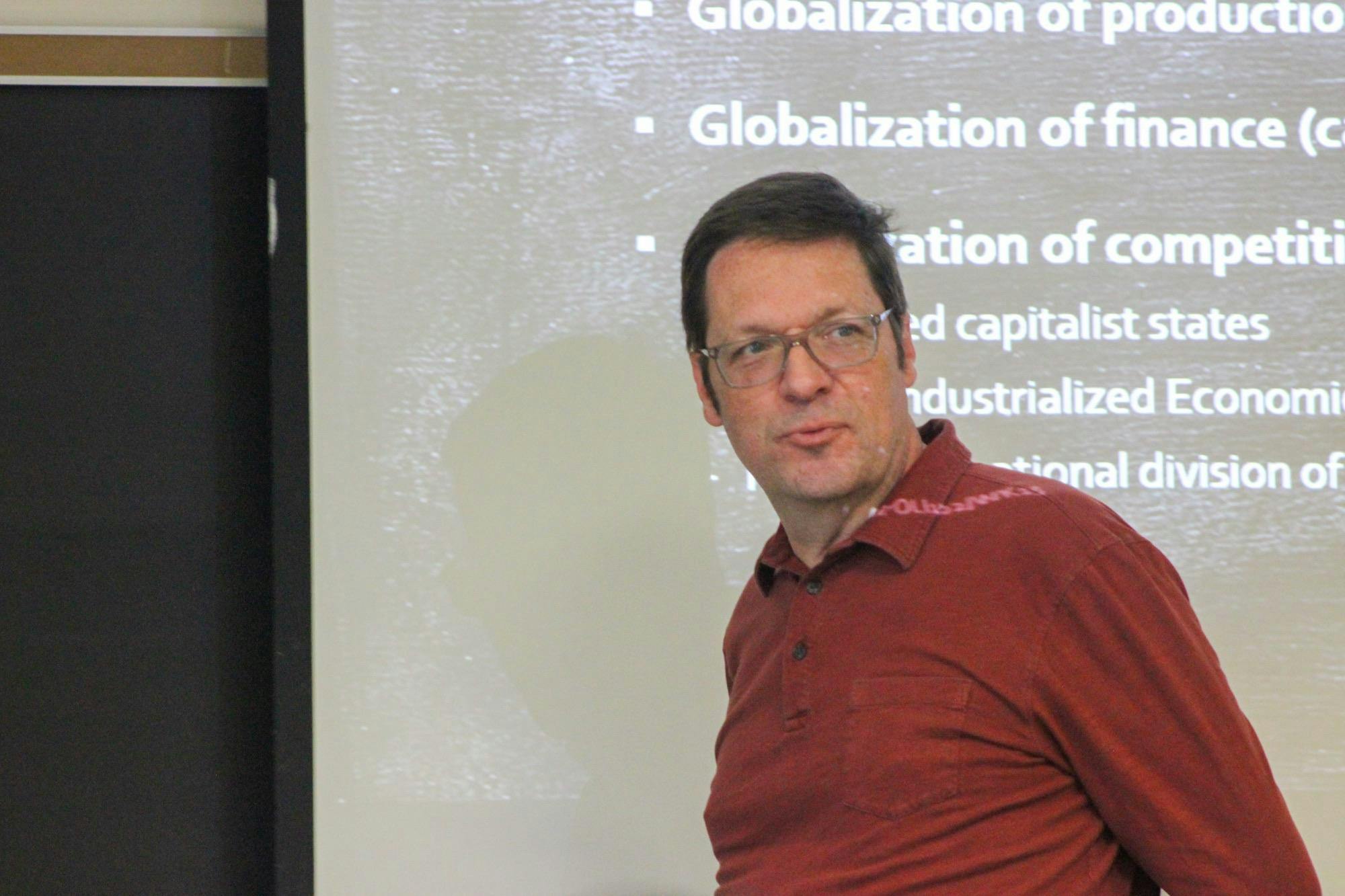
Here at Wittenberg University, political science professor James Allan sees both sides of the AI argument. Allan, who has been teaching at Witt for more than 20 years, personally uses it toward research of mundane things such as tech and household purposes.
But there's a fine line between using and abusing AI, Allan notes. From a faculty perspective, there are concerns of academic integrity diminishing due to students’ usage of AI. Allan said he has had to adapt.
“I have changed my assignments in my classes a little bit,” he said. “I’ve tried to design assignments which are harder for it (AI) and require more hands-on thinking.”
There is also the concern of overreliance for the model. With the ability for AI to be “efficient” in saving time for students completing work for school or otherwise, it can leave a lasting effect on them that they may not realize.
“AI is meant to simplify all these tasks to save us time,” Allan commented. “But in doing so it’s actually reducing our ability to think critically and all the skills useful to you to get a job later.”
Ally White, a double major in marketing and communication at Wittenberg, has seen firsthand how AI has gotten introduced into college. The graduating senior said AI is a useful tool.
“I do think AI can fill existing jobs,” White said. “But the jobs can adjust and transform in some sort of different capacity.”
As a student going into marketing, White believes AI is not at the level to be “fully sound” in her expertise in analytical marketing. She noted that AI is only going to become more prevalent, making it more and more adaptabie in the job market.
White has experience with AI and views it as a tool, such as assisting her with small details with graphic design for Wittenberg athletics. Her biggest pet peeve, however, is the decline in critical thinking skills while using AI.

“It’s like a robot talking to a robot,” she said. “I want to take pride and be able to think for myself and know how to talk to people.” White referenced moments where people would go to ChatGPT to help answer text messages, which she finds to be humorous.
AI in higher education has already left an impact in its short but dominant tenure. It has forced students and faculty alike to adapt to the growing changes associated with AI, and the ethical and mental challenges that it brings. The new question that has emerged is, what can we do about it?


